Production-ready procedural level system with artistic control | Master Thesis
Buried beneath the surface of a forgotten world lies a bunker that was never meant to be found again. Now it’s alive.
This project is part of my Master Thesis, exploring how procedural generation can be art-directed instead of purely random.
The goal was to create a system that produces coherent, readable, and atmospheric spaces, while still allowing for replayability.
The dungeon is built in Unreal Engine 5.4 using a modular workflow combined with a rule-based generation system inspired by maze algorithms. The entire production pipeline was intentionally designed for a two-person team, prioritizing efficiency, scalability, and long-term maintainability. All assets, materials, and systems are built with reuse in mind, allowing for rapid iteration without sacrificing visual consistency.
This approach reflects a production mindset where art direction, technical constraints, and team size are considered together from the start, rather than treated as separate problems.
Instead of relying on randomness alone, the system ensures:
- Connected layouts
- Controlled pacing
- Meaningful exploration
Visually, the environment focuses on the contrast between:
industrial decay and unstable energy technology, guiding the player through subtle color and lighting cues. Procedural doesn’t have to feel random. It can feel intentional.
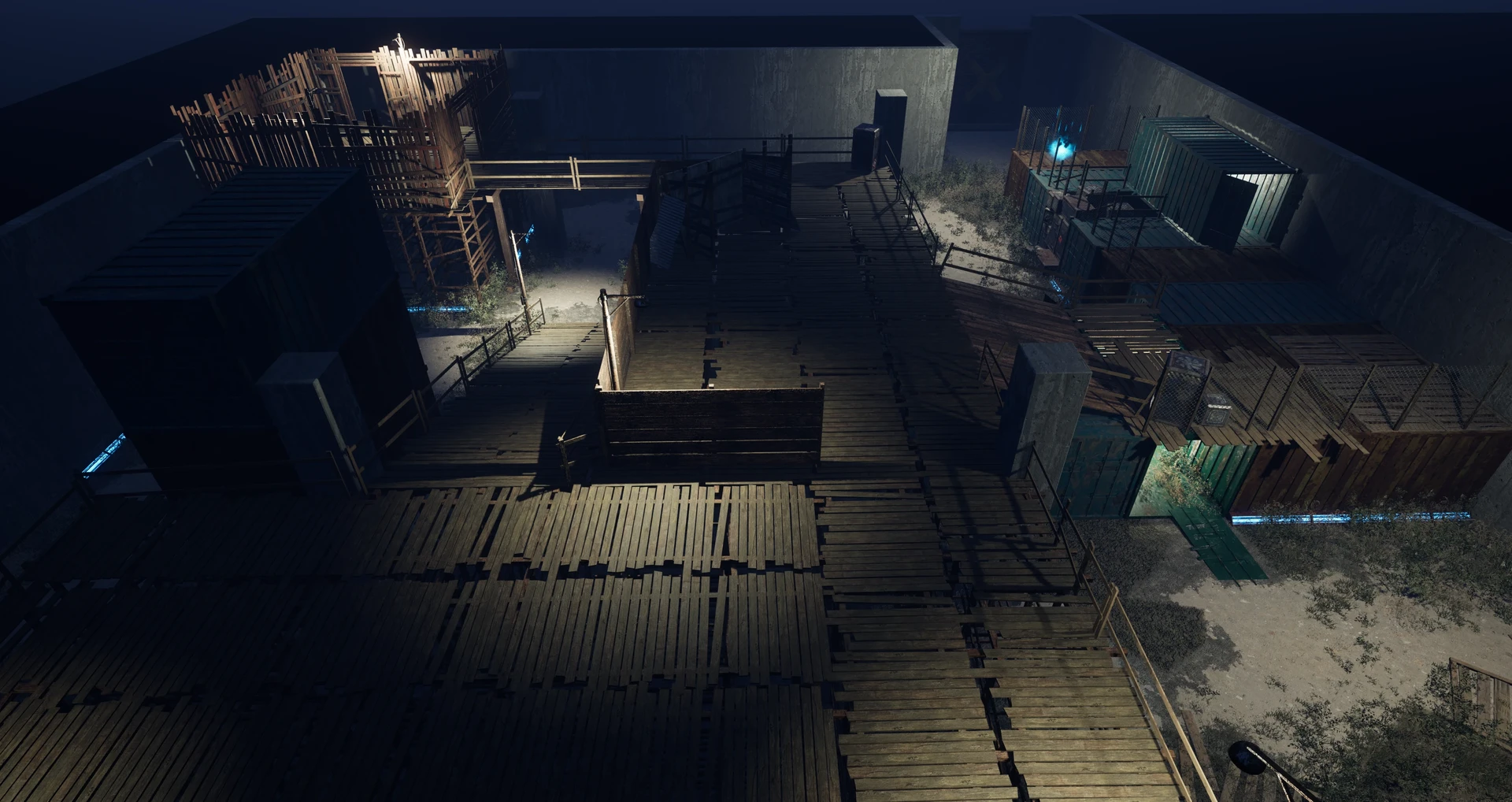
Procedurally generated dungeon layout assembled in real-time from modular room blocks.

Lighting and color are used as primary tools for player guidance and spatial readability.

Each run produces a new layout while maintaining visual cohesion and navigational clarity.

Vertical layering and modular composition are used to break up flat layouts and create depth.

Spaces are designed to support natural player flow without relying on UI elements like minimaps. (1/2)

Spaces are designed to support natural player flow without relying on UI elements like minimaps. (2/2)

Full dungeon overview showing the final generated structure and spatial distribution.
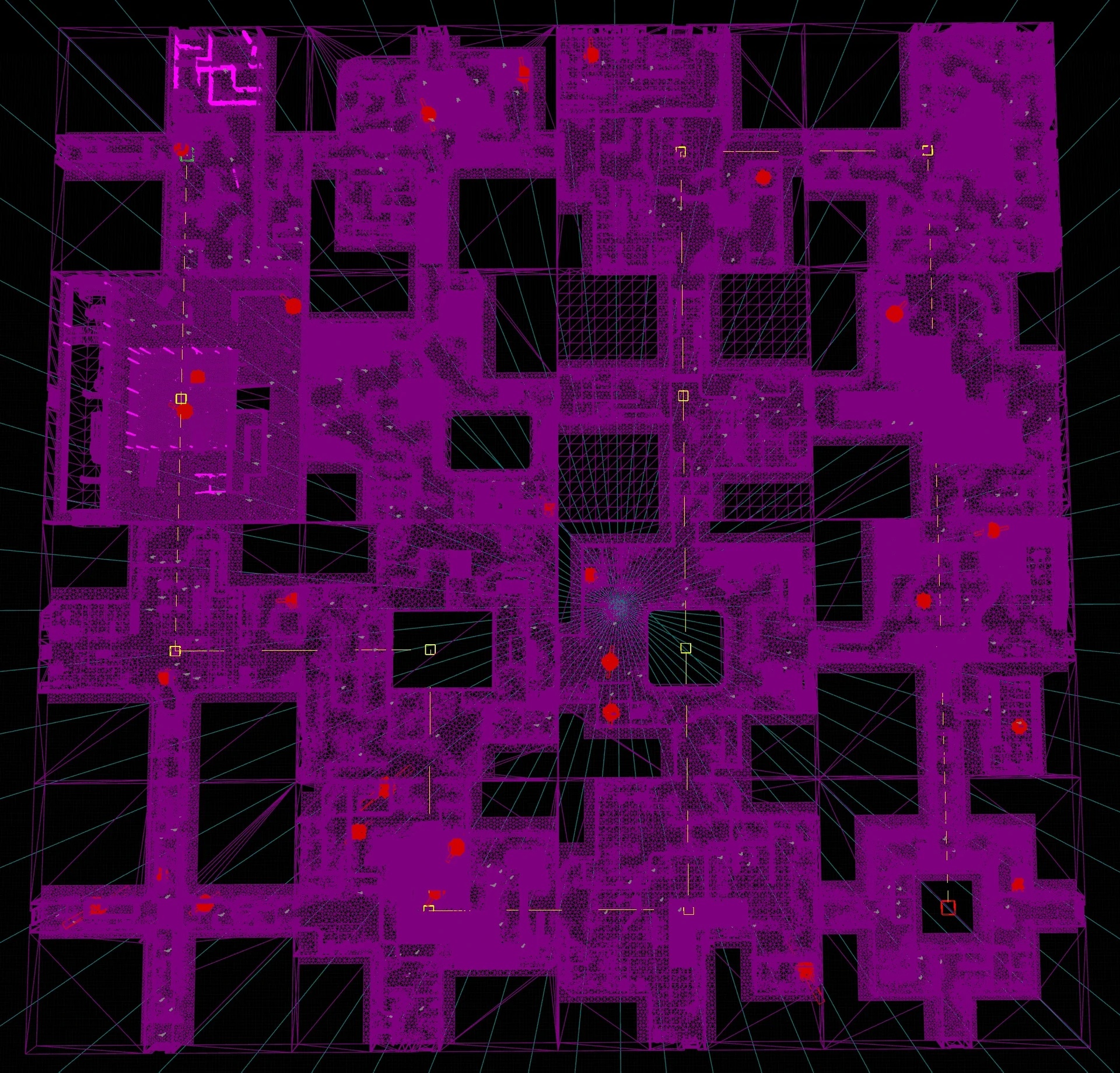
Underlying structure of the generation system based on a grid-driven layout logic.

Each module functions as an independent level unit (80x80m), enabling controlled procedural assembly while preserving intentional level design principles.

Player navigation is driven through implicit design cues such as lighting, contrast, and spatial hierarchy, reducing reliance on UI-based guidance.

Modular asset library designed for reuse, scalability, and consistent visual language.

Meshes combined strategically to reduce draw calls and improve runtime performance. (1/2)

Combined meshes (2/2)

Trim sheet workflow used to maintain texel density consistency and accelerate production.

Blocking meshes seal unused connections between modules, ensuring only algorithmically defined paths remain accessible.
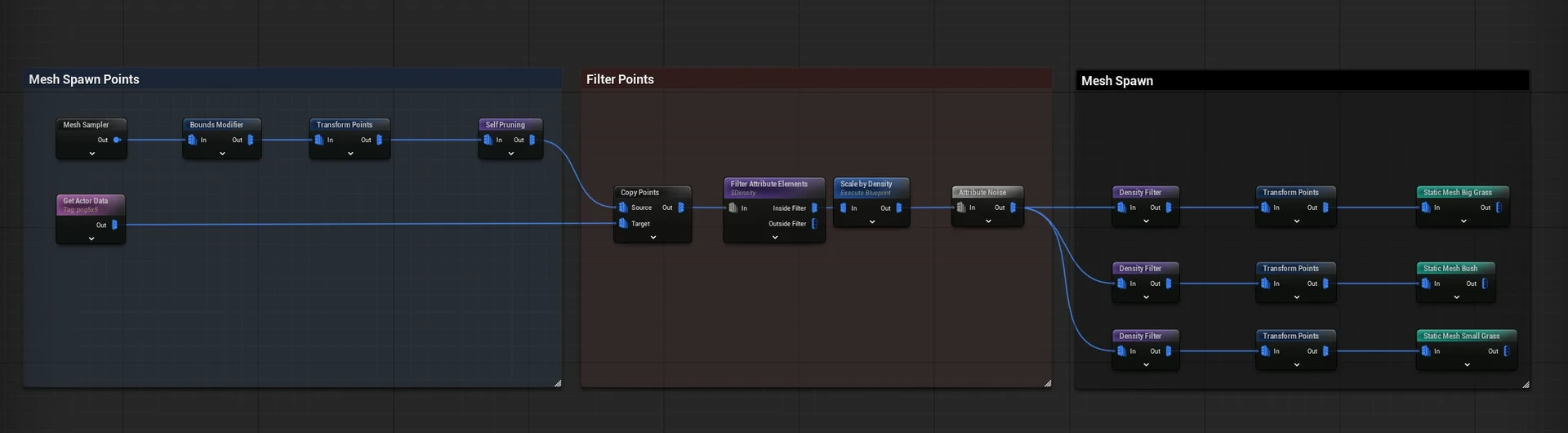
PCG graph controlling procedural placement of environmental details and foliage.

Texture-based masks used to control distribution and avoid uniform procedural patterns.

Procedural foliage placement driven by masks to achieve organic variation and visual cohesion. (1/2)

PCG Foliage (2/2)

Custom emissive shader using layered noise and panning to create animated energy effects.

Directional UV-based shader used to subtly guide player navigation and reinforce layout readability.